.svg)


About Mycionics
Mycionics builds AI robots for fragile, irregular produce, at industrial scale, and they are already at work on commercial mushroom farms. Founded in 2014 by Stefan Glibetic, Murray Good and Doug Wagner, and developed for a decade inside working Canadian mushroom farms, we are a team of 16 in Kitchener, Ontario, Canada's largest robotics and automation cluster.
Our team of mechatronics engineers, AI specialists and experienced growers knows how physically demanding mushroom harvesting is. We picked thousands of boxes by hand in our early years, and we saw why standard factory automation fails in a hot, humid growing room. Our mission is to make mushroom farming a better job and a better business by giving growers robots and crop data that fit the farms they already have. We believe in hybrid, not replacement: robots take the repetitive picking and packing, people keep the work that needs judgment. We build modular systems that retrofit existing shelf farms and equip new drawer farms, and we design them so a farm's own maintenance staff can keep them running.
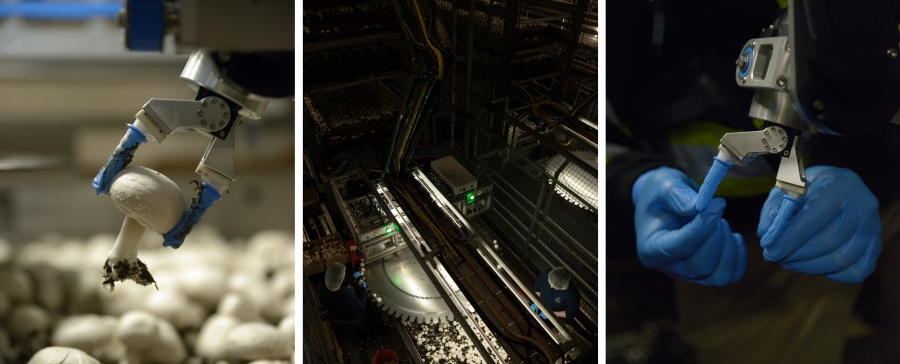
Today, backed by more than CAD 20 million in private investment and government support, we design hybrid robotic systems and the intelligence behind them. We combine our own 3D vision, data analytics, robotic arms and patented grippers that work like a human hand, so every unit on a farm both does the work and sees the crop. We design and build them in Canada, protected by 16 issued and 5 pending patents in North America, Europe and Australia. Our systems are built to solve chronic industry labour shortages and to give growers the data to run a more predictable, more profitable farm.
.png)
Our Team


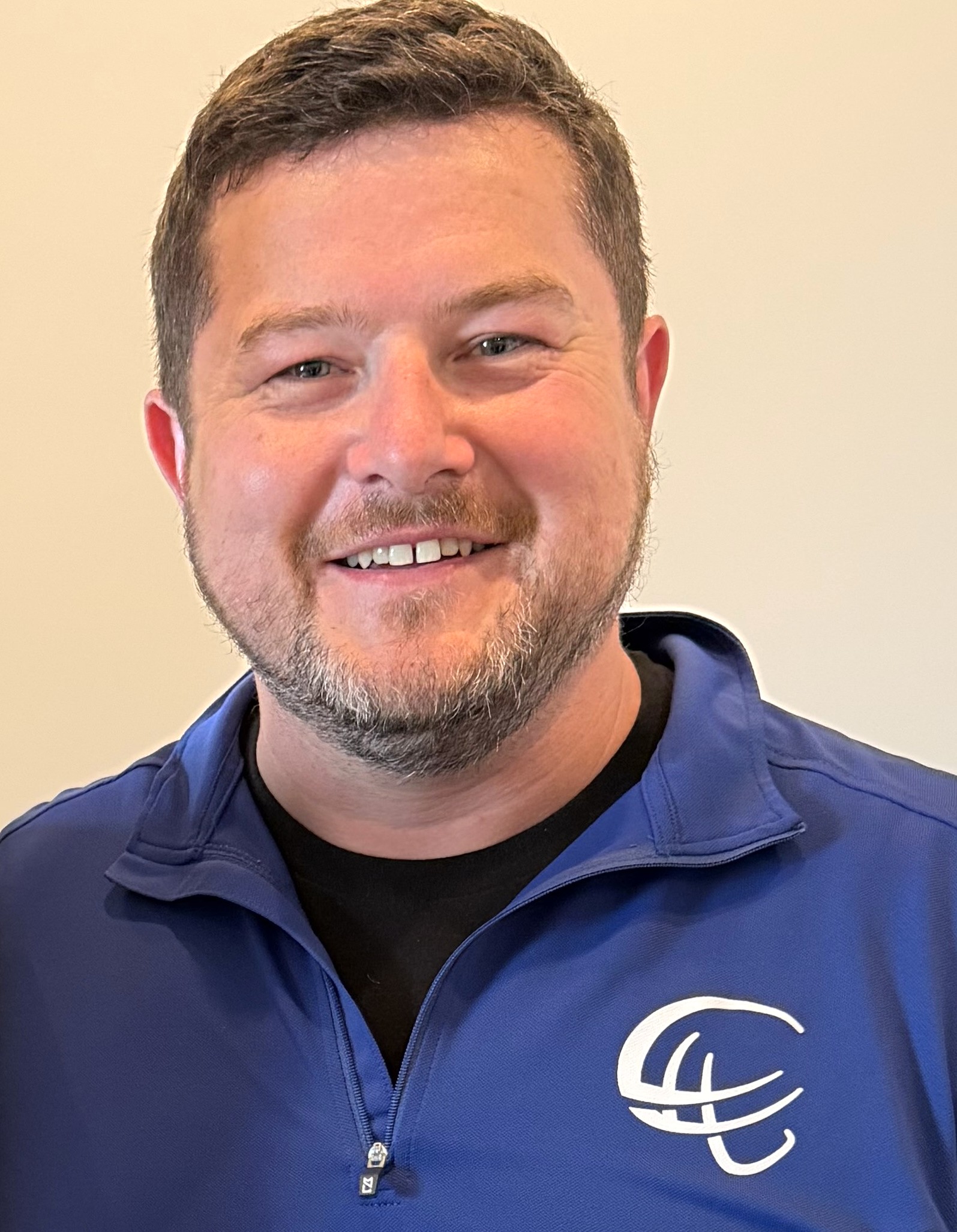
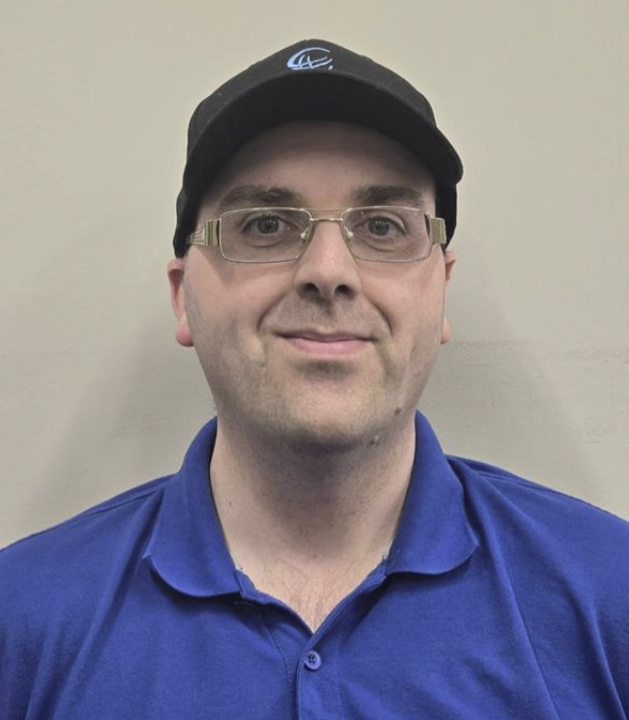






Investors & Advisors


Bryan Webb
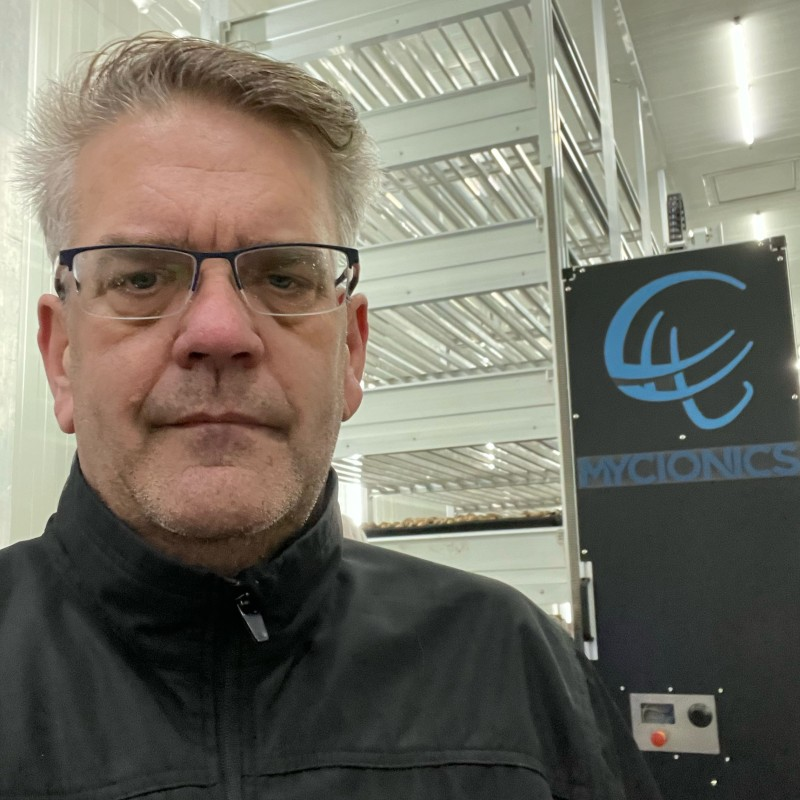
Murray Good

Doug Wagner

Matt Rendall

Ryan Gariepy

Kurtis McBride
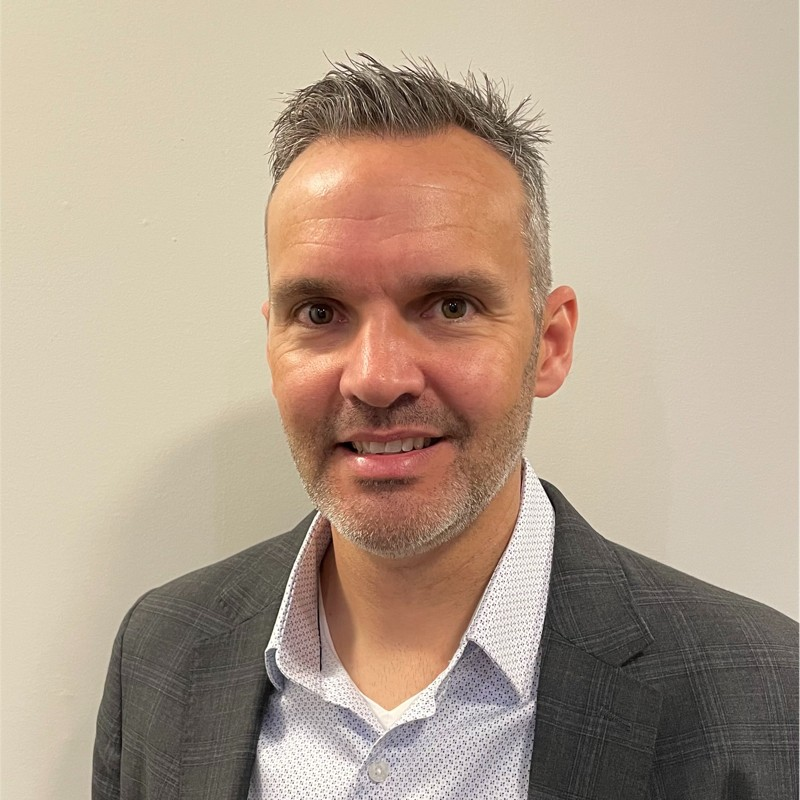
Kevin Hallahan

Rick Coccimiglio
The Mycionics Journey
From a university lab to farms in North America and Europe
2013
University Project
The concept originated as a university mechatronics project after farmer Murray Good challenged students to solve chronic labour shortages on his farm. This initial research identified the extreme challenges of automating delicate fungal harvesting in humid environments.
.png)
2014
Founded Mycionics
Mycionics was founded by Stefan Glibetic, Murray Good and Doug Wagner. The first years combined farm expertise and patient capital to build custom vision and gripping technology that could fit existing farm systems.

.png)
2017
Moved to Whitecrest Mushrooms
The move to Whitecrest Mushrooms put the team inside a working farm under one rule from the head grower: if the robot does not pick it, you are picking it. That made reliability, food safety and maintenance by farm staff part of the design from day one. We wrecked a lot of mushrooms to perfect the design.
.png)
2022
Full automation proven, and its limit found
In 2022 the fully automated shelf system, with picking, packing and lift units working together, could pick, cut, pack, weigh and stack mushrooms without damage. The picking units spent only about 40% of their time picking, with the rest lost to moving and scanning. It worked as a machine, but not as a business case for the farm.

2023
Pivot to hybrid, modular systems
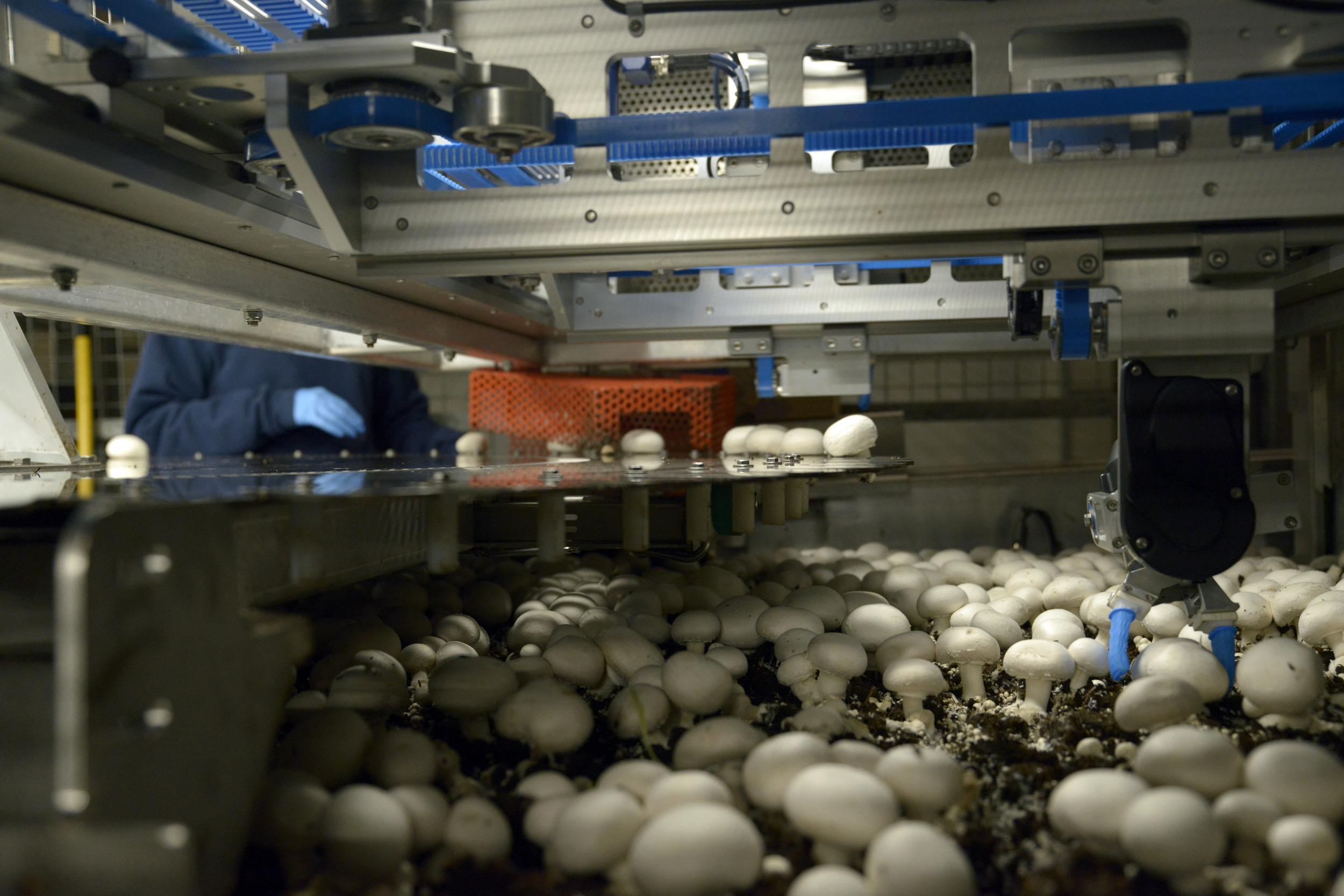
The team broke the system into modules, vision, arms and hands, that share the work with human pickers: robots take the repetitive picking and packing, people keep the judgment work. The first version was tested on a drawer farm as a picking unit with gantry arms, and the systems were redesigned for both existing shelf farms and new drawer farms.
2024
First pilots on drawer farms and Crop Scout
The first drawer picking units and Crop Scout were piloted with growers in Canada and Europe. These units brought the industrial design a farm needs: waterproof, cost-effective, high-performing and maintained by farm staff. The pilots confirmed that a hybrid split of labour between robots and people is the practical path for the industry.
-p-1600.jpg)
2025
Moved to Kitchener-Waterloo to scale
With pilots complete and production ramping, Mycionics moved to Kitchener-Waterloo, Canada's largest robotics and automation cluster, to build out manufacturing and the engineering team.

2026
Moving to full-farm rollouts
Crop Scout raised yield 7.8% at South Mill Champs in 2026, measured by the grower. The technology is now deployed or on order at six commercial mushroom farm sites in North America and Europe, moving to full-farm rollouts.
Join the Mycionics Team
.svg)
Stay Current With the Future
of Robotics


.svg)
.svg)

