Our Solutions

Hand Icon

Automated Picking

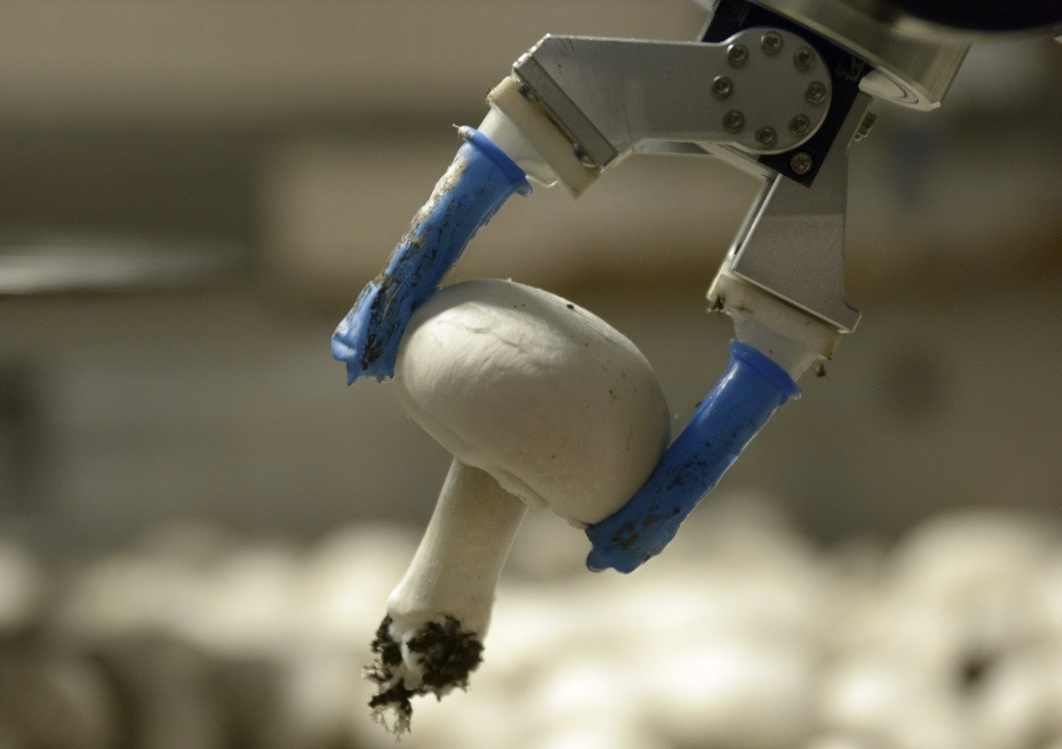
Picking units sit on the stack and work next to human pickers. The gripper has a firm core to transfer force and a soft outer layer that shapes itself to the cap, and the fingers wear the same blue nitrile gloves your pickers use. Each unit sees the bed with its own 3D vision and picks each mushroom close to its ideal size.
Mycionics finger gripper holding a mushroom
Package Icon

Automated Packing

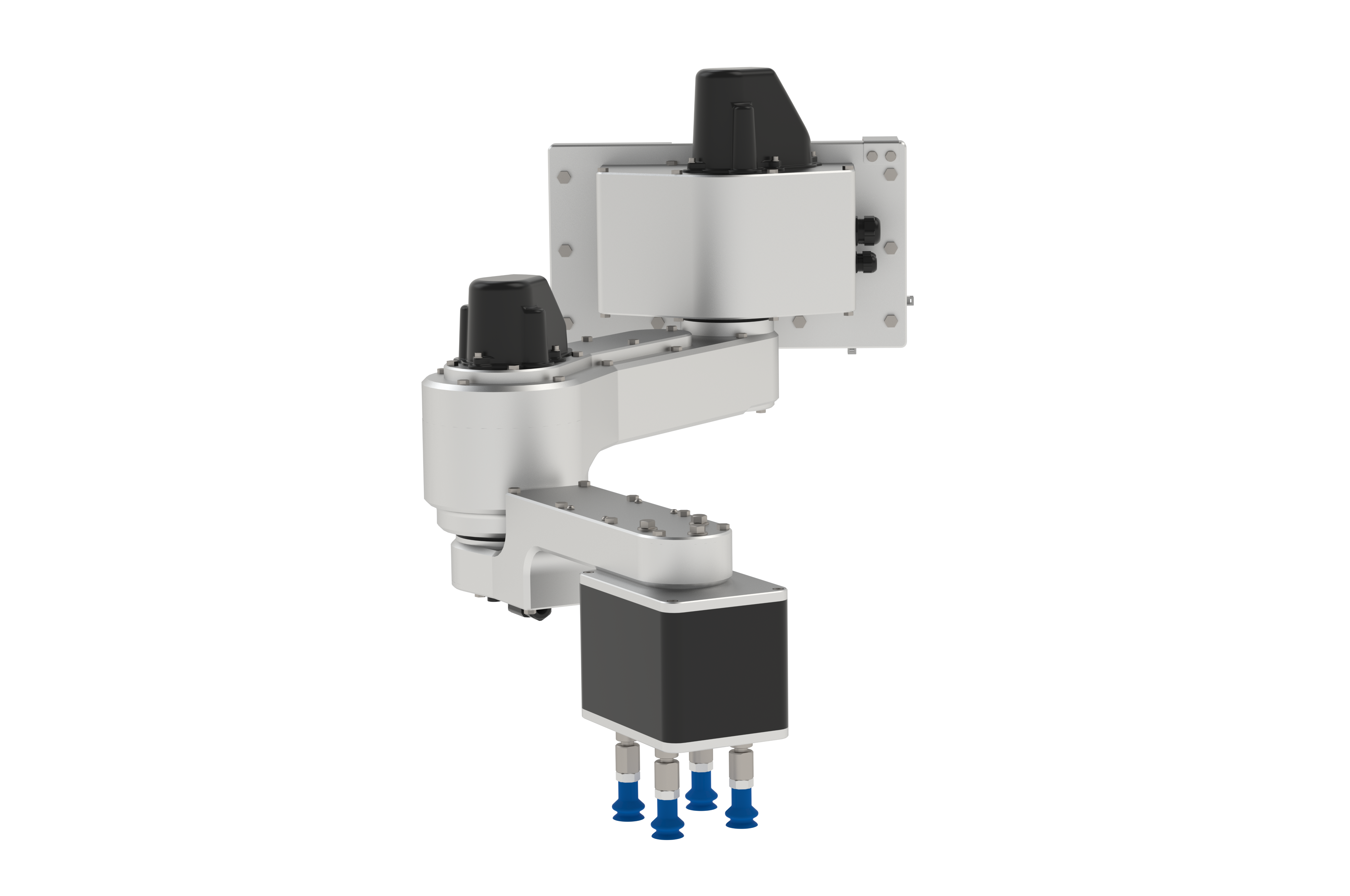
Packing is about half of harvest labour, so we run it in parallel with picking. Conveyors built into the harvesting trolleys, or the farm's blue belts, carry the crop to a mobile packing unit that cuts, weighs and boxes it. Pickers pick with both hands; the robot packs. The packing unit is the same design as the picking unit, with a different tool.
Mycionics packing arm handling mushrooms from a conveyor
Target Icon

Decision-Assisted Pointing

Where people pick, Crop Scout helps them decide. Our 3D vision and AI scan the bed, measure the size and position of every mushroom, then mark the right ones to pick and set the pace of the platform. Pickers spend less effort deciding and more time picking, and every bed gets consistent picking decisions.
Mycionics Crop Scout scanning a mushroom bed
Brain Icon

Planning Through
Crop Intelligence

Crop Scout records the whole crop: the position, size mix, density and compost height of every bed on every level of the farm. Growers get five-day yield forecasts, maps of areas that need attention and picker performance by bed, and over time a record that guides growing decisions, not only harvesting.
An image of a mushroom pointcloud

Next-Generation Intelligent
Harvesting Solutions

7.8%

Measured Yield Increase (2026)

Latest results at South Mill Champs show a 7.8% yield increase with Crop Scout, measured by the grower, which is more than 1 million extra pounds of mushrooms a year. It follows the crop from the pin stage so every mushroom is picked close to its ideal size.

Up to 4

Robotic Units per Stack

Our systems are modular, so each farm chooses how many units to add, up to four per stack. One unit has shown it can handle about a third of a bed. On existing shelf farms, people pick with both hands and our packing units take over the packing.

2-3 Year

Payback

Based on field data on yield improvement, labour cost savings, crop feedback and reduced giveaway, the business case shows a typical payback of two to three years on our robotic solutions, depending on the farm and configuration.

Same

Hygiene Routine as Your Pickers

Housed in wash-down tolerant, steam-proof enclosures with no exposed lubricants, our units follow the same hygiene routine as your harvesters, down to the replaceable blue nitrile gloves on the fingers. Farm staff maintain them with ordinary tools under our remote guidance.

Why Mushrooms Are Hard to Automate

What a decade on the farm taught us, and how we built for it

X Icon

The Challenge
on the Farm

Check Mark Icon

The Mycionics
Approach

A mushroom bruises at a fingertip's touch and the damage shows hours later in the cooler. Pulling it straight up decaps it; suction and palming shear the skin.
Patented fingers with a rigid backbone and soft skin pivot and twist each mushroom off the compost, the way a skilled picker does, wearing standard nitrile gloves.
Beds are stacked 20 cm apart in rooms at 90% humidity, with spores in the air and uneven light. Standard industrial cameras and controllers were not built for that.
We built our own patented vision hardware, lighting and on-board computers for the bed. They record the crop and feed the AI that guides picking, growing and staffing decisions.
The crop grows about 4% an hour, so every bed is a race. Pickers juggle knives, boxes and judgment calls, and tiredness limits how fast and how well they pick.
Split the work. Robots take the repetitive picking and packing, Crop Scout takes the decisions, and people keep the tasks that need a human hand and eye.