.svg)


Most growers we meet have already accepted that automation is coming to mushroom farming. The hard part is working out what it is worth on their own farm, with their own beds, their own crew and their own buyers.
The arithmetic is not complicated, but the common mistakes all lean the same way. They make the case look worse than it is, which is why so many farms stall on the decision.
The most frequent error is to value a picker at the lowest hourly rate the farm could legally pay, then ask whether a machine beats that number.
That is not what a picker costs. The real figure includes employment taxes, insurance, transport, recruiting, training, and the time spent replacing people who leave. On farms that house or relocate their workforce, it includes that too. Whatever the number is on your farm, it is meaningfully higher than the wage line, and it is the number the comparison should use.
Harvest labour is not just the people on the beds. It is the supervisors who assign them, the schedulers who plan the week, the managers who deal with absences, and the constant churn of hiring and training in a job with high turnover.
When a machine takes a share of the picking, that whole structure gets smaller and steadier. Farms that only count the pickers miss a real part of the saving, and they also miss the part that is hardest to buy back once it is gone: predictability. A room that can be harvested on schedule regardless of who turned up is worth something on its own.
This is the one that changes the answer most, and it is the least intuitive.
There are two ways to get more product out of a room. You can grow more mushrooms, or you can harvest the same mushrooms heavier. They are not equivalent.
Growing more mushrooms means more things to find, pick, cut and pack. The labour goes up in step with the yield. Harvesting the same mushrooms closer to their ideal size costs nothing extra to pick. It is the same count, the same handling, the same boxes, with more weight in them.
That weight was already grown. It is on the bed. The only question is whether the farm captures it, and that comes down to picking each mushroom at the right hour rather than the convenient one.
Two places, and neither is visible by eye.
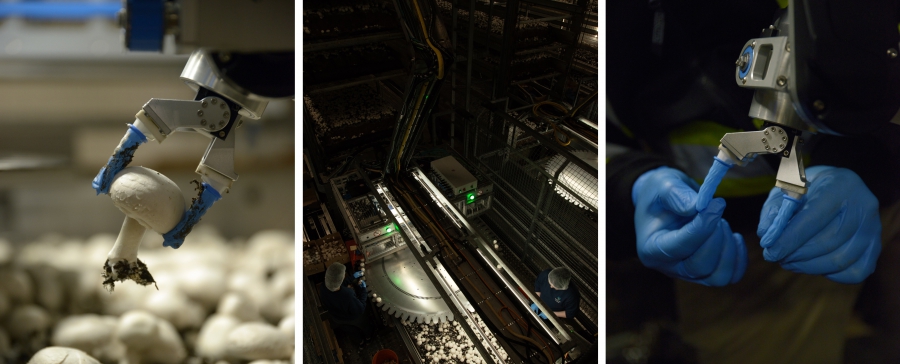
Judging size. People are surprisingly poor at estimating mushroom size by sight, and the errors are not small. A mushroom is a three-dimensional object growing on a curve, so a modest mistake in diameter is a large mistake in mass. Across a whole bed, small and consistent misjudgement is a real amount of product left behind. A camera measuring every mushroom does not have this problem.
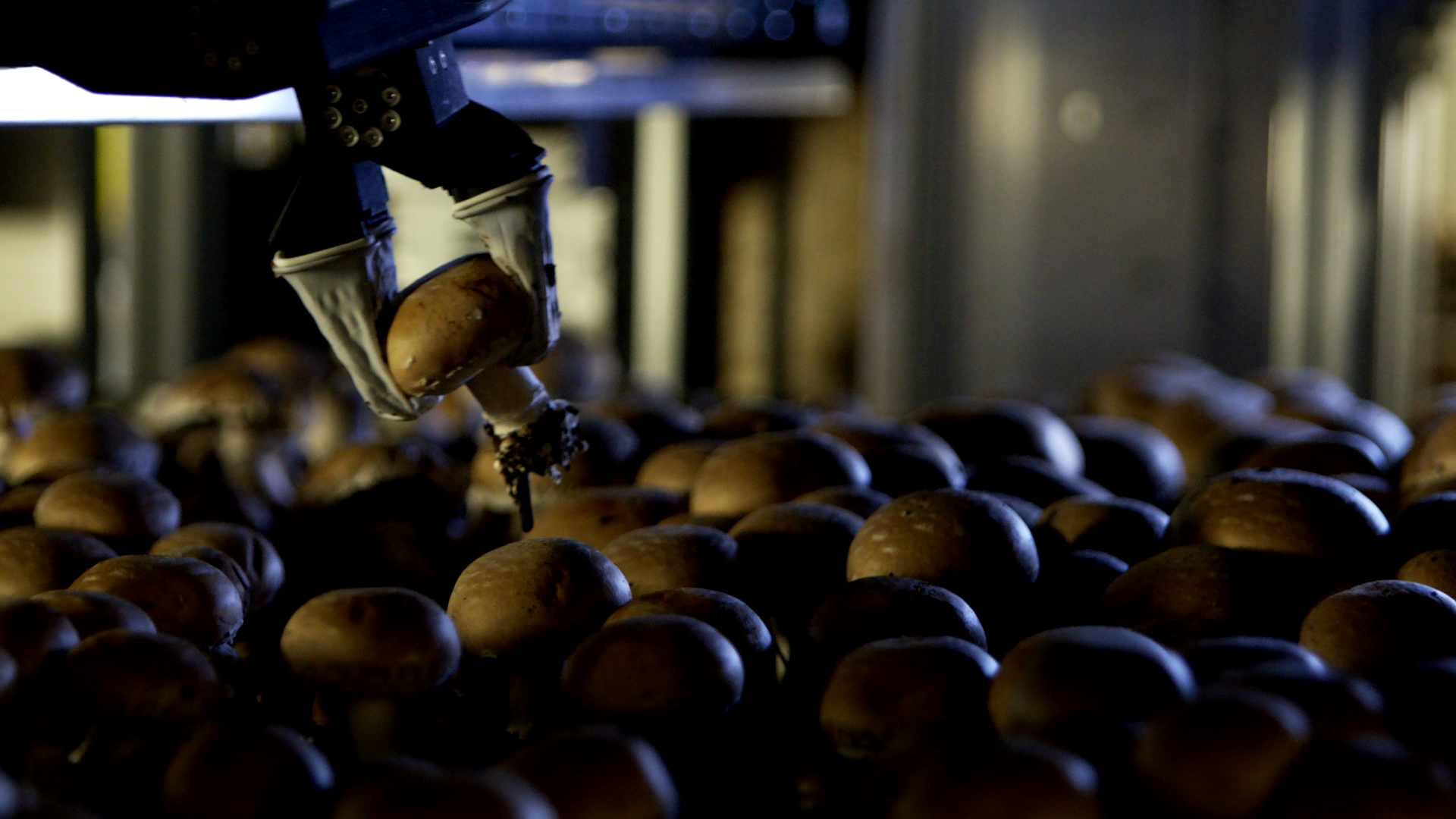
Giveaway in the pack. A punnet has to meet its stated weight, so people fill to be safe rather than to be exact. If a pack needs a few grams to hit target and the next mushroom in hand is much larger, the difference is given away for free. Choosing a mushroom that fits the gap, and cutting stems to a consistent length instead of by eye, keeps weight the farm already paid to produce.
If you want an honest picture of your own farm before anyone quotes you anything, four numbers will tell you most of it:
None of these require a supplier. They are the baseline that makes any automation conversation concrete, and most farms find the exercise useful on its own.
Automation on a mushroom farm is usually sold as a way to need fewer people. That is part of it. But the larger and quieter part is that a room run on measurements instead of impressions gives up less of what it grew.
The profit is in details too small and too numerous to see from a ladder in a dim room. Counting them is the job.
Curious to learn more? Check out our Resources page.
.svg)

.svg)


.svg)
.svg)


