.svg)


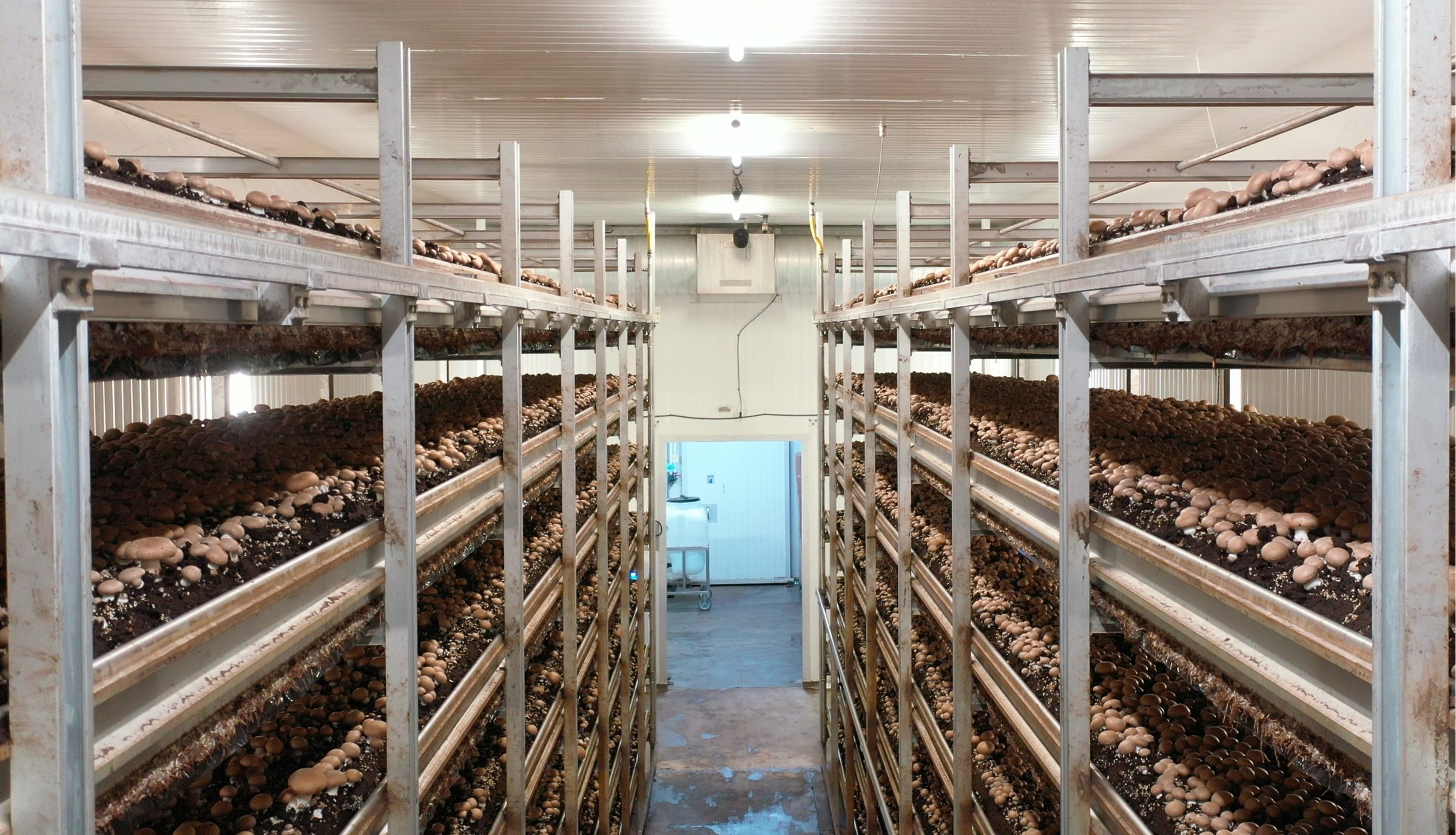
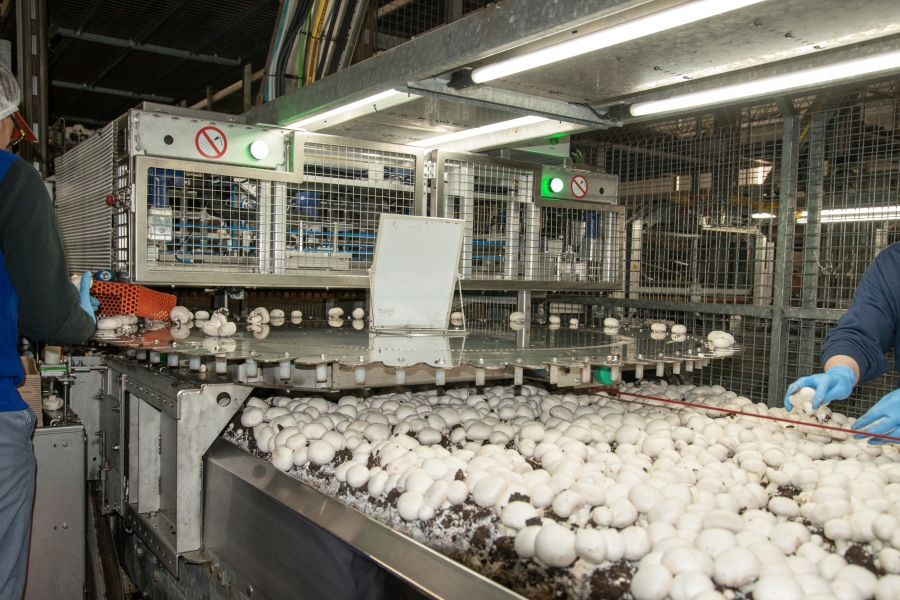
From the outside, a commercial mushroom farm looks like a group of warehouses, and on the inside it runs like a factory. The mushrooms grow indoors on beds stacked five or six levels high, in rooms where a computer controls the temperature, the humidity and the fresh air. The crop never sees the weather outside, so the farm grows and picks mushrooms every week of the year and can plan weeks ahead how much it will ship.
A farm is made up of dozens of identical growing rooms. A machine fills each room with compost, the material mushrooms grow on, which is made from straw and other farm by-products. About two weeks later the first mushrooms are ready, and the room is picked for roughly three weeks. The room is then emptied, cleaned with steam and filled again, and the same schedule starts over.
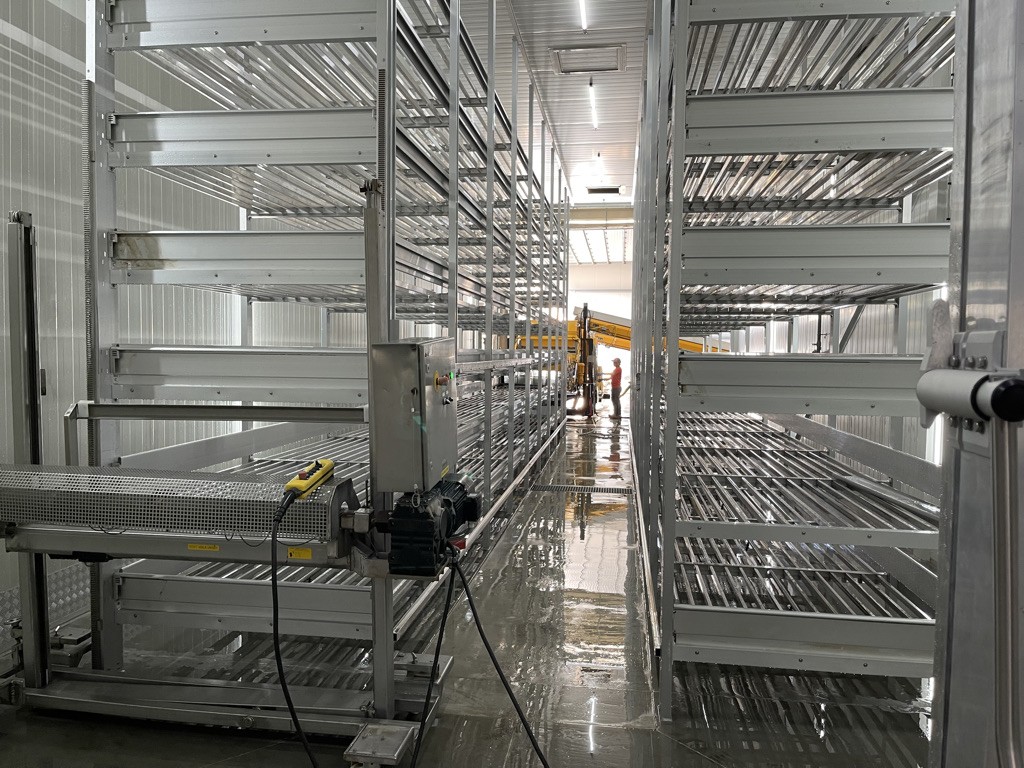
Mushrooms start to form when the air around them turns cooler and fresher. In a growing room the grower makes that change on a chosen day through the climate computer, and the first mushrooms are ready a predictable number of days later. On the day a room is filled, the farm already knows which days that room will be picked.
A farm with thirty rooms fills six of them every week and empties six others. On any day some rooms have just been filled, some are a week away from their first mushrooms and some are being picked. Fresh mushrooms leave the farm every day of the year to supply supermarkets that order them every week. The farm's staff work all year, and its rooms are in use every week.
Stacked beds, in rooms that are refilled as soon as they are emptied, let a mushroom farm grow a large amount of food in a small space. An industry study found that up to a million pounds of mushrooms can be grown on a single acre in a year.
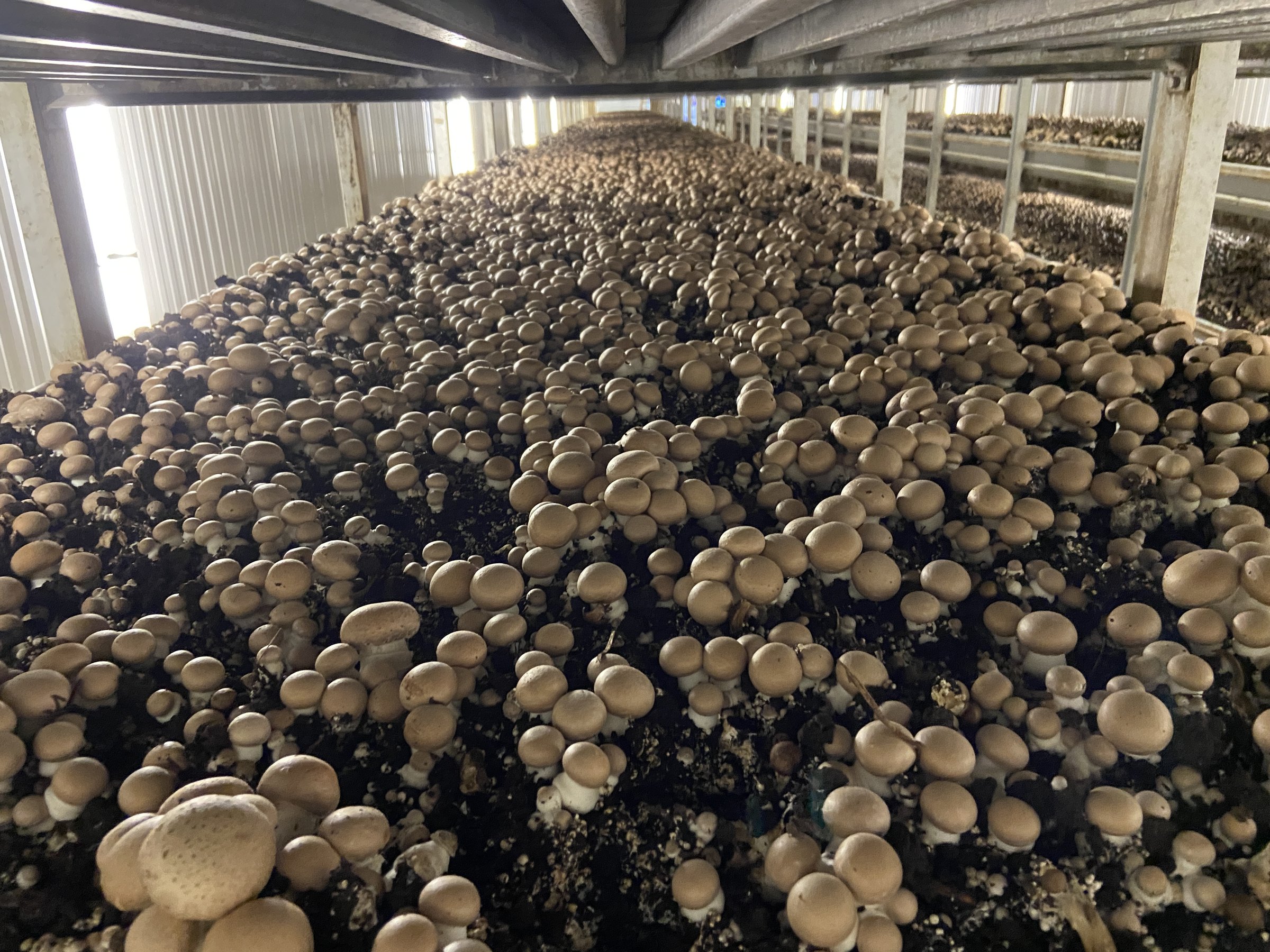
Machines fill and empty the rooms, and computers run the climate. The harvest is still done by people, who pick every mushroom by hand. Mushrooms bruise at a light touch and grow in tight clusters, which is why picking them by machine without damage has challenged engineers for fifty years. Harvesting is the one step that has stayed manual in an operation this organized, and it is the step Mycionics builds its robots for.
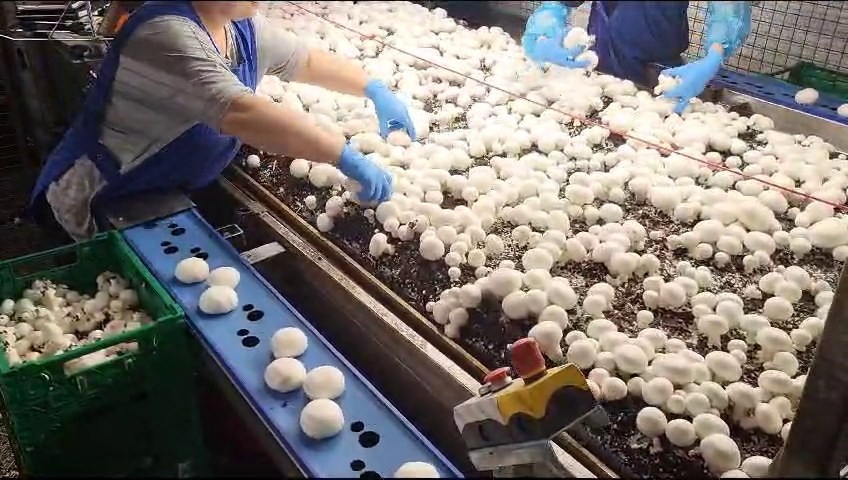
A mushroom farm produces food the way a factory produces a product, indoors, on a schedule, every day of the year.
Curious to learn more? Check out our Resources page.

.svg)

.svg)


.svg)
.svg)


